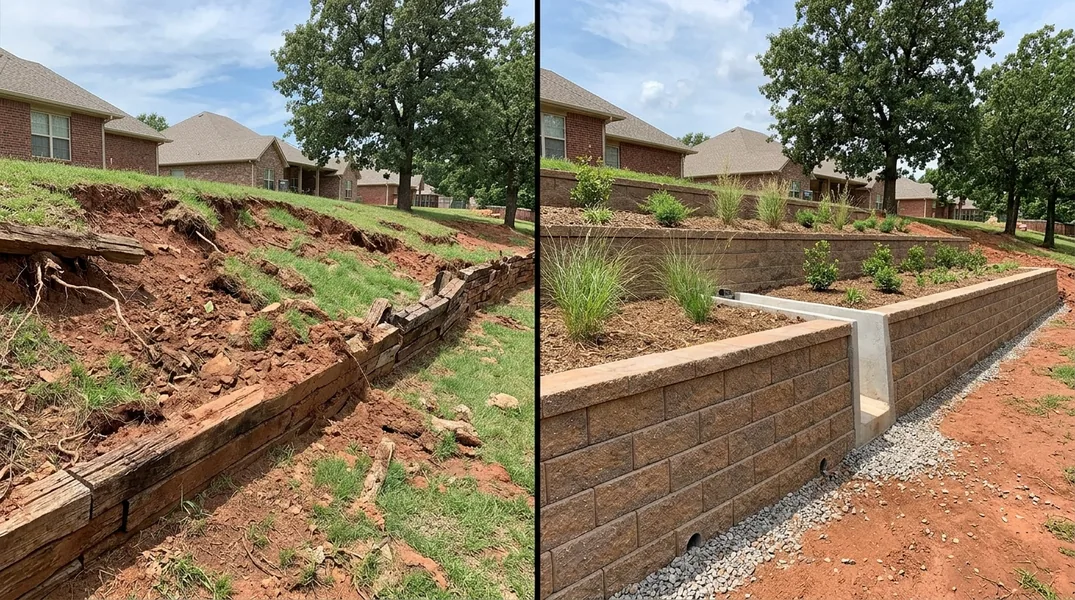
Why Spring Storms Put Your Retaining Wall at Risk
Spring in Oklahoma City brings renewal, but it also brings severe weather. Heavy rains, flash floods, and unpredictable storms are part of the season, and they pose a serious threat to retaining walls across the region. Many homeowners don't realize that a retaining wall's failure often has nothing to do with structural weakness or poor craftsmanship. Instead, it comes down to water management and the forces that water exerts on the wall itself.
When spring storms dump inches of rain in a short period, the soil behind your retaining wall becomes saturated. This saturation creates pressure that pushes against the wall with tremendous force. Over time, this repeated stress weakens even well-built structures. Flash flooding compounds the problem by introducing flowing water that erodes soil and destabilizes the foundation. Without proper retaining wall drainage, your investment is vulnerable to catastrophic failure.
Understanding Hydrostatic Pressure and Its Destructive Force
Hydrostatic pressure is the force exerted by water against a solid structure. Think of it this way: when soil becomes waterlogged, it gains significant weight and pushes outward in all directions, including against your retaining wall. The deeper the saturated soil, the greater the pressure. During spring storms and flash floods in Oklahoma City, this pressure can build rapidly and overwhelm even sturdy walls that lack proper drainage solutions.
A hydrostatic pressure retaining wall failure doesn't happen overnight in most cases. Instead, it's a gradual process. Water seeps into small cracks, freezes during winter, and expands, making the cracks larger. Spring thaw and heavy rains then fill those cracks again, perpetuating the cycle. The wall bows, leans, or develops visible cracks. Eventually, sections collapse. This is why drainage isn't an afterthought in retaining wall design; it's essential to longevity.
The Critical Role of Retaining Wall Drainage Systems
Proper retaining wall drainage is the first line of defense against water damage. A well-designed drainage system redirects water away from the wall and prevents saturation of the soil behind it. Without it, every spring storm becomes a potential disaster. The drainage system works by collecting water that infiltrates the soil and channeling it safely away from the structure, reducing the hydrostatic pressure that builds up during heavy rain.
There are several types of drainage solutions used in retaining wall construction. Perforated pipes, gravel backfill, and filter fabric all play roles in managing water flow. The most effective systems use a combination of these elements to create multiple pathways for water to escape. When properly installed, these systems can reduce soil saturation by 70 to 80 percent, dramatically extending the life of your wall. If your existing retaining wall lacks adequate drainage, you may be facing costly Retaining Wall Repair or even replacement after the next major storm.
French Drains: The Gold Standard for Retaining Wall Protection
A retaining wall French drain is one of the most effective solutions for managing water behind retaining walls. A French drain is a trench filled with gravel and a perforated pipe that collects groundwater and directs it away from the wall. When installed correctly along the base of a retaining wall, a French drain intercepts water before it has a chance to build up pressure against the structure.
The beauty of a French drain is its simplicity and effectiveness. Water naturally flows downhill and toward areas of least resistance. The perforated pipe in a French drain provides that path of least resistance, capturing water and moving it safely away from your wall. During Oklahoma City's intense spring storms and flash flooding events, a properly installed French drain can mean the difference between a wall that survives intact and one that fails. Many homeowners who have invested in French drains report that they no longer see water pooling or seeping at the base of their walls, even after heavy rain.
Signs Your Retaining Wall Is Suffering from Water Damage
It's important to recognize the warning signs that your retaining wall is being damaged by water and hydrostatic pressure. Early detection can save you thousands in repair costs. Common signs include visible cracks, especially horizontal cracks or cracks that widen over time; bowing or leaning of the wall; water seeping or pooling at the base; white mineral deposits (efflorescence) on the wall surface; and soil erosion behind or at the base of the wall.
If you notice any of these signs after spring storms, it's time to call a professional. Waiting typically makes the problem worse. Water damage to retaining walls is progressive, and each additional rainfall adds more stress. A small leak or minor crack today can become a structural failure within months if left untreated. If you're concerned about your wall's condition, contact Oklahoma City Retaining Wall at (405) 766-3551 to schedule a free estimate and have a professional assess the damage.
Retaining Wall Installation and Replacement: Planning for Storm Resilience
If your existing retaining wall is failing or you're planning new construction, now is the time to prioritize proper drainage from the start. Retaining Wall Installation done right includes comprehensive drainage planning. This means selecting appropriate materials, designing proper grading, installing perforated pipes and French drains, and using quality filter fabric to prevent soil from clogging the drainage system.
Retaining Wall Replacement is sometimes necessary when damage is severe, but it's also an opportunity to upgrade your wall with modern drainage solutions. Concrete Retaining Walls can be designed with integrated drainage systems that keep them dry and stable for decades. The upfront investment in proper installation is far less than the cost of emergency repairs or replacement after a catastrophic failure. When you work with Oklahoma City Retaining Wall, our team ensures that every new installation is built to withstand the spring storms and flash floods that Oklahoma City experiences.
Looking for a professional retaining wall contractor in Oklahoma City? Oklahoma City Retaining Wall responds fast for all your retaining wall needs.
Get a Free QuoteOur services: Retaining Wall Installation · Retaining Wall Repair · Retaining Wall Replacement