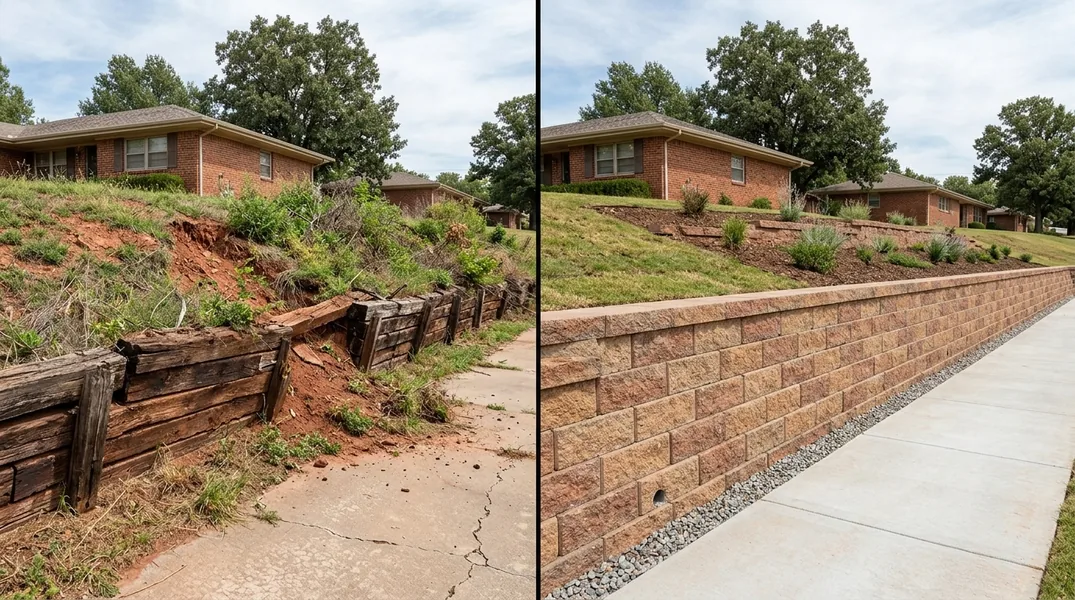
Signs Your Retaining Wall Is in Trouble
A leaning retaining wall is never something to ignore. Unlike a small crack in your driveway, a wall that tilts or shifts indicates structural stress that will only worsen over time. In the Oklahoma City metro area, where soil composition and seasonal moisture fluctuations create unique challenges, understanding the warning signs can help you act before catastrophic failure occurs.
The most obvious sign is visible lean or tilt away from the retained soil. You might notice the top of the wall pulling away from the grade, or the entire structure bowing outward. Other red flags include horizontal retaining wall crack repair needs, water seeping through the wall face, soil erosion at the base, or chunks of concrete breaking away. If you see standing water pooling against the wall or notice the ground settling unevenly behind it, these too signal that your wall's drainage and structural integrity are compromised. Don't wait for the wall to collapse; these symptoms demand professional evaluation.
Understanding Why Retaining Walls Lean and Fail
Retaining walls fail for several interconnected reasons, most of which relate to soil pressure, water, and improper construction. The primary culprit is hydrostatic pressure from water trapped behind the wall. When drainage systems fail or weren't installed correctly during the original build, water accumulates in the soil and pushes against the wall with tremendous force. Over months and years, this pressure gradually forces the wall to lean or bow outward.
Poor soil conditions compound the problem. Oklahoma City and surrounding areas experience clay-heavy soils that expand when wet and contract when dry, creating constant movement and stress on the wall structure. Inadequate compaction during installation, insufficient wall height for the soil load, or lack of proper reinforcement can all contribute to failure. In some cases, the wall was simply built too thin or with substandard materials. Tree roots, freeze-thaw cycles, and vibration from heavy vehicles nearby can also accelerate deterioration. Understanding the root cause is essential because it determines whether Retaining Wall Repair can address the issue or whether complete Retaining Wall Replacement is necessary.
Repair vs. Replacement: How to Decide
The decision between repair and replacement depends on the severity of the lean, the wall's age, the cause of failure, and your long-term plans for the property. If your wall is leaning but the lean is minor (less than one inch over its height) and there are no major cracks, repairs might be sufficient. In these cases, addressing drainage, stabilizing the base, or installing internal bracing can restore function without the expense of a full rebuild.
However, if the wall is leaning significantly, shows multiple large cracks, or is actively moving, replacement is almost always the safer and more cost-effective choice in the long run. A severely compromised wall that you patch today may fail again next year, costing you more in repeated repairs. Additionally, if the wall is more than 20 years old, the underlying cause of its failure is likely systemic, meaning repairs will only be temporary. Retaining Wall Replacement gives you a fresh start with modern drainage design, proper compaction, and materials suited to local soil conditions. The peace of mind and structural integrity you gain often justify the higher upfront investment.
Retaining Wall Repair Solutions in the OKC Metro
When repair is the right choice, several proven methods can stabilize a leaning wall. Helical anchors or soil nails can be driven through the wall face into stable soil behind it, essentially anchoring the wall and preventing further movement. These systems work well for walls with minor to moderate lean and can often be installed without demolishing the existing structure.
Improving drainage is another critical repair strategy. If water is the primary culprit, installing or repairing a perforated drain pipe at the base of the wall, adding a gravel backfill layer, or installing a surface drainage system can dramatically reduce hydrostatic pressure. Sealing visible cracks with concrete caulk or epoxy injection prevents water from penetrating further into the wall structure. In some cases, reinforcing the base with concrete underpinning or installing a tieback system can restore stability. These targeted repairs work best when the wall's fundamental design is sound and the problem is relatively recent. If you're unsure whether your wall qualifies for repair, Oklahoma City Retaining Wall can provide a free assessment to guide your decision.
The Case for Retaining Wall Replacement
Complete Retaining Wall Replacement becomes necessary when structural damage is extensive, the wall's design is fundamentally flawed, or repairs would be nearly as expensive as a new installation. Replacement allows you to build with current best practices, including proper site drainage, appropriate wall height and thickness for your soil load, and modern reinforcement materials like Concrete Retaining Walls with integrated drainage systems.
A new wall installed by experienced professionals will include a proper foundation, compacted base, reinforced concrete or block construction, perforated drain pipe, and gravel backfill designed specifically for the soil conditions at your site. This comprehensive approach prevents the problems that caused your original wall to fail. While replacement requires more upfront investment than repair, it eliminates the risk of recurring failure and provides a 30 to 50-year lifespan with minimal maintenance. For homeowners in the Oklahoma City area, replacement often proves to be the smarter long-term investment.
Retaining Wall Repair and Replacement Cost in the OKC Metro: What to Budget
Understanding the financial investment required is crucial to your decision. Retaining wall repairs typically range from $500 to $5,000 depending on the scope of work. Simple drainage improvements or crack sealing fall on the lower end, while installing helical anchors or underpinning can reach the higher range. These costs are significantly less than replacement, which is why repair is attractive when it's a viable option.
Full Retaining Wall Replacement generally costs between $3,000 and $15,000 or more, depending on the wall's height, length, material choice, and site conditions. A 20-foot wall made of concrete blocks might cost $4,000 to $8,000, while a taller or longer wall with reinforced concrete could exceed $12,000. The good news is that investing in a properly built replacement wall eliminates future repair costs and protects your property value. For an accurate pricing estimate tailored to your specific situation, contact Oklahoma City Retaining Wall at (405) 766-3551 or request a free estimate online. Our team will assess your wall's condition and provide transparent pricing for both repair and replacement options.
When to Call a Professional Near You
If you've noticed your retaining wall leaning, cracking, or showing any of the warning signs mentioned earlier, now is the time to call a professional. Attempting DIY repairs on a structural wall can be dangerous and may make the problem worse. Water damage, soil collapse, or wall failure can injure someone and cause significant property damage. Licensed contractors understand local building codes, soil conditions, and the specific challenges that Oklahoma City's climate presents.
Oklahoma City Retaining Wall has years of experience diagnosing and fixing leaning walls throughout the OKC metro area. Our team can determine whether your wall needs repair or replacement, explain your options clearly, and provide transparent pricing before any work begins. Don't let a failing wall compromise your property's safety and value. Contact us today at (405) 766-3551 or fill out our online form to schedule your free estimate. We'll give you the expert guidance you need to make the right choice for your home.
Looking for a professional retaining wall contractor in Oklahoma City? Oklahoma City Retaining Wall responds fast for all your retaining wall needs.
Get a Free QuoteOur services: Retaining Wall Installation · Retaining Wall Repair · Retaining Wall Replacement